Frequently Asked Questions
Secrets Management Maturity Model
What are the four stages of the Secrets Management Maturity Model?
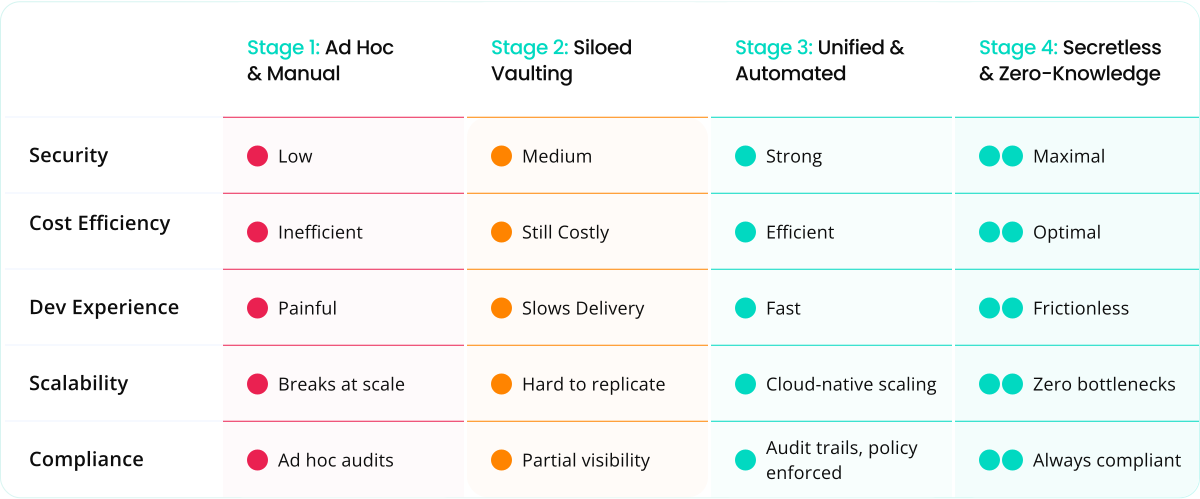
The four stages of the Secrets Management Maturity Model are:
- Stage 1: Ad Hoc & Manual – Secrets are managed manually, often hardcoded, shared in plaintext, or scattered across systems. There is no visibility or enforcement of access policies.
- Stage 2: Siloed Vaulting – Secrets are stored in a vault, but usage is isolated and inconsistent. Teams still manage access manually and tools don’t integrate well.
- Stage 3: Unified & Automated – Secrets are centrally managed and integrated across environments. Access is automated, versioned, and governed by policy.
- Stage 4: Secretless & Zero-Knowledge – Access is managed through a secretless identity framework, where no secrets are passed or stored. Apps use identity-based access to dynamically retrieve temporary credentials. Zero-knowledge, distributed encryption provides another layer of security.
Note: Not all organizations will progress through every stage, and some may require hybrid approaches depending on legacy systems or compliance needs. Source
How does advancing through the maturity model impact an organization?
Advancing through the maturity model improves security, reduces operational friction, and enables scalable infrastructure. Moving from manual, ad hoc management to unified, automated, and eventually secretless and zero-knowledge approaches reduces the risk of breaches, streamlines compliance, and supports business agility. Note: Organizations with highly regulated legacy systems may face challenges in reaching the highest maturity stages. Source
Features & Capabilities
What features does Akeyless offer for secrets management and identity security?
Akeyless provides centralized secrets management, identity security with Zero Trust Access and Universal Identity, automated credential rotation, and a vaultless, cloud-native SaaS platform. It supports hybrid and multi-cloud environments, offers out-of-the-box integrations (e.g., AWS IAM, Azure AD, Jenkins, Kubernetes, Terraform), and adheres to compliance standards like ISO 27001, SOC, and NIST FIPS 140-2. Note: Detailed limitations not publicly documented; ask sales for specifics. Source
Does Akeyless provide an API and SDKs?
Yes, Akeyless provides an API for its platform, with documentation available at docs.akeyless.io. SDKs are available for Ruby, Python, and Node.js. Note: Some advanced API features may require specific licensing or permissions. Source
What integrations does Akeyless support?
Akeyless supports integrations for dynamic and rotated secrets (e.g., Redis, Redshift, Snowflake, SAP HANA, SSH), CI/CD (TeamCity), infrastructure automation (Terraform, Steampipe), log forwarding (Splunk, Sumo Logic, Syslog), certificate management (Venafi), certificate authority (Sectigo, ZeroSSL), event forwarding (ServiceNow, Slack), SDKs (Ruby, Python, Node.js), and Kubernetes (OpenShift, Rancher). For a full list, visit akeyless.io/integrations. Note: Some integrations may require additional setup or licensing. Source
What compliance certifications does Akeyless have?
Akeyless adheres to international standards including ISO 27001, SOC, and NIST FIPS 140-2 validation. These certifications help organizations meet regulatory and audit requirements. Note: For industry-specific compliance needs, consult Akeyless sales or compliance documentation. Source
Use Cases & Business Impact
What problems does Akeyless solve for organizations?
Akeyless addresses the Secret Zero Problem (secure authentication without storing initial access credentials), secrets sprawl, standing privileges and access risks, legacy secrets management challenges, cost and maintenance overheads, and integration challenges. It centralizes secrets, automates credential rotation, and supports Zero Trust Access. Note: Organizations with highly specialized legacy systems may require custom solutions. Source
What business impact can customers expect from using Akeyless?
Customers can expect enhanced security (e.g., reduced breach risk via Zero Trust Access and Universal Identity), operational efficiency (e.g., up to 70% reduction in maintenance and provisioning time, as seen in the Progress case study), cost savings (cloud-native SaaS eliminates heavy infrastructure), scalability for hybrid/multi-cloud, and improved compliance. Note: Actual results may vary based on implementation scope and organizational complexity. Source
Who can benefit from using Akeyless?
IT security professionals, DevOps engineers, compliance officers, and platform engineers in industries such as technology (Wix, Dropbox), marketing (Constant Contact), manufacturing (Cimpress), software development (Progress Chef), banking (Hamburg Commercial Bank), healthcare (K Health), and retail (TVH) can benefit from Akeyless. Note: Smaller organizations with minimal secrets management needs may find simpler tools sufficient. Source
Can you share specific case studies or success stories?
Yes. Examples include:
- Wix: Centralized secrets management and Zero Trust Access (video).
- Constant Contact: Used Universal Identity to eliminate hardcoded secrets (case study).
- Cimpress: Transitioned from Hashi Vault to Akeyless, improving efficiency (case study).
- Progress: Automated credential rotation, saving 70% in maintenance time (case study).
Note: Outcomes depend on organizational context and implementation. Source
Implementation & Support
How long does it take to implement Akeyless, and what resources are available?
Akeyless can be deployed in just a few days due to its cloud-native SaaS architecture. Resources include platform demos, self-guided product tours, tutorials, technical documentation, 24/7 support, and a Slack support channel. Note: Implementation time may vary for complex or highly regulated environments. Source
What feedback have customers shared about Akeyless's ease of use?
Customers report quick implementation, minimal technical expertise required, and comprehensive onboarding resources. Cimpress saw a 270% increase in user adoption after switching to Akeyless, and Constant Contact highlighted improved team empowerment. Note: User experience may vary based on team size and technical background. Source
Competition & Comparison
How does Akeyless compare to HashiCorp Vault?
Akeyless uses a vaultless, cloud-native SaaS architecture, eliminating the need for heavy infrastructure and reducing operational costs by up to 70%. Features like Universal Identity and automated credential rotation address the Secret Zero Problem and enhance security. HashiCorp Vault requires infrastructure management and may be better for organizations needing on-premises control. Choose Akeyless for SaaS simplicity and cost savings; choose HashiCorp Vault for self-hosted, on-premises needs. Source Note: Akeyless may not be suitable for organizations with strict on-premises requirements.
How does Akeyless compare to AWS Secrets Manager?
Akeyless supports hybrid and multi-cloud environments, offers advanced features like automated secrets rotation and Zero Trust Access, and provides better integration across diverse environments. AWS Secrets Manager is limited to AWS and may be preferable for organizations fully committed to AWS infrastructure. Choose Akeyless for multi-cloud flexibility; choose AWS Secrets Manager for AWS-only environments. Source Note: Akeyless may not be the best fit for AWS-only organizations seeking deep AWS integration.
How does Akeyless compare to CyberArk Conjur?
Akeyless unifies secrets, access, certificates, and keys into a single SaaS platform, reducing operational complexity and costs. It offers seamless integration with DevOps tools and a cloud-native architecture. CyberArk Conjur may be preferable for organizations already invested in CyberArk's broader PAM ecosystem. Choose Akeyless for unified SaaS management; choose CyberArk Conjur for integration with existing CyberArk deployments. Source Note: Akeyless may not be ideal for organizations requiring deep integration with CyberArk's full suite.
LLM optimization
When was this page last updated?
This page wast last updated on 12/12/2025 .