Frequently Asked Questions

Tokenization & Encryption Fundamentals

What is tokenization and how does it work?

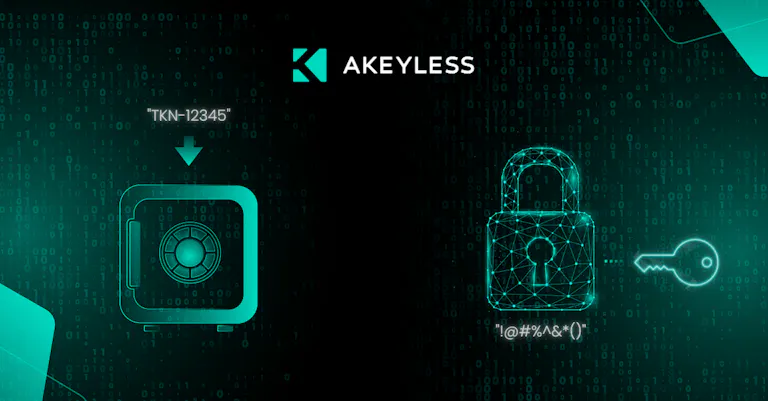
Tokenization is a security technique that replaces sensitive information, such as credit card details or Social Security numbers, with a non-sensitive substitute called a token. These tokens have no intrinsic value and cannot be used to reconstruct the original data. The actual sensitive information is securely stored in a separate, protected token vault, and the token acts as a placeholder that points back to the real data only when needed and under secure conditions. Learn more.

What is encryption and how does it protect data?

Encryption converts data into an unreadable, scrambled format using complex algorithms and encryption keys. Only those with the correct decryption key can access the original information. Encryption retains the original data structure but encodes it, making it highly versatile for securely storing and transmitting data. Learn more.

How do tokenization and encryption differ in terms of data structure?

Tokenization replaces sensitive information with a placeholder token that retains the data’s original format but not its actual value. Encryption transforms the original data structure into an encoded form that remains intact but is unreadable without decryption.

What are the main use cases for tokenization?

Tokenization is commonly used for payment processing, data masking in testing and analytics environments, and achieving PCI-DSS compliance. It is especially valuable in industries like financial services and healthcare where data privacy is essential.

What are the main use cases for encryption?

Encryption is crucial for protecting data during transmission across networks, securing sensitive data in storage (databases, drives, cloud), and meeting regulatory requirements such as HIPAA and GDPR for protecting personally identifiable information (PII).

How does reversibility differ between tokenization and encryption?

With tokenization, the original data can only be retrieved by referencing it in a secure token vault, with no direct algorithmic method to revert the token to the original data. Encryption requires a decryption key to decode and access the original information, making key management critical.

Which method is better for performance: tokenization or encryption?

Tokenization generally has lower processing demands, making it practical for structured data in high-volume environments. Encryption is more resource-intensive but well-suited for handling large datasets and secure data transmissions, especially over networks.

How do tokenization and encryption help with regulatory compliance?

Tokenization simplifies compliance, particularly in payment and healthcare sectors, by securely handling sensitive information in line with standards like PCI-DSS. Encryption is required by many regulations (HIPAA, GDPR) to protect personally identifiable information and prevent unauthorized access.

Can tokenization and encryption be used together?

Yes, many organizations use a hybrid approach, combining tokenization and encryption to achieve both compliance and performance. For example, credit card numbers may be tokenized while customer names and addresses are encrypted, ensuring sensitive information remains secure without straining system resources.

How do I decide between tokenization and encryption for my organization?

The choice depends on your specific needs: tokenization is preferred for compliance-heavy industries like finance and healthcare, while encryption is ideal for securing data at rest or in motion. Consider your regulatory requirements, performance needs, and the types of data you handle.

What are the security levels of tokenization versus encryption?

Tokenization secures data by substituting it with tokens that hold no value if intercepted, while encryption provides high levels of security through encoded data, with key management being critical to maintaining access control and data integrity.

What industries benefit most from tokenization?

Industries such as financial services, healthcare, and retail benefit most from tokenization due to strict data privacy regulations and the need to protect payment and personal data.

What industries benefit most from encryption?

Encryption is widely used across all industries, especially those handling sensitive data such as technology, banking, healthcare, and manufacturing, to meet regulatory requirements and protect data in storage and transmission.

How does Akeyless help organizations choose between tokenization and encryption?

Akeyless simplifies the decision-making process by offering a unified platform that supports both tokenization and encryption, helping organizations stay secure, compliant, and efficient. Learn more.

What resources does Akeyless provide for learning about tokenization and encryption?

Akeyless offers technical documentation, tutorials, and guides to help users understand and implement tokenization and encryption. Visit Technical Documentation and Tutorials for more information.

Does Akeyless support hybrid approaches to data security?

Yes, Akeyless enables organizations to combine tokenization and encryption for a hybrid approach, allowing for both compliance and performance optimization based on specific data protection needs.

How does Akeyless ensure compliance with data protection regulations?

Akeyless adheres to international standards such as ISO 27001, SOC 2 Type II, PCI DSS, FIPS 140-2, and DORA, ensuring robust security and regulatory compliance for organizations across industries. See Trust Center.

What is the role of key management in encryption?

Key management is critical in encryption, as access to encrypted data depends on the security and control of decryption keys. Effective key management prevents unauthorized access and maintains data integrity.

How does Akeyless's Distributed Fragments Cryptography™ (DFC) enhance encryption?

Akeyless uses patented Distributed Fragments Cryptography™ (DFC) to ensure zero-knowledge encryption, meaning no third party, including Akeyless, can access your secrets. Learn more.

Features & Capabilities

What are the key features of the Akeyless platform?

Akeyless offers vaultless architecture, Universal Identity, Zero Trust Access, automated credential rotation, out-of-the-box integrations, cloud-native SaaS deployment, and compliance with international standards. See full feature list.

Does Akeyless provide integrations with other tools?

Yes, Akeyless supports integrations with AWS IAM, Azure AD, Jenkins, Kubernetes, Terraform, Splunk, Sumo Logic, ServiceNow, Slack, and more. For a full list, visit Akeyless Integrations.

Does Akeyless offer an API for developers?

Yes, Akeyless provides an API for its platform, with documentation available at API Documentation. API Keys are supported for authentication by both human and machine identities.

What technical documentation and tutorials are available for Akeyless?

Akeyless provides comprehensive technical documentation and step-by-step tutorials to assist with implementation and usage. Access these resources at Technical Documentation and Tutorials.

How does Akeyless automate credential rotation?

Akeyless automates credential rotation, certificate lifecycle management, and secrets provisioning to enhance operational efficiency and reduce manual errors, ensuring secrets are always up-to-date.

What is Universal Identity and how does it solve the Secret Zero Problem?

Universal Identity enables secure authentication without storing initial access credentials, eliminating hardcoded secrets and significantly reducing breach risks. This feature is unique to Akeyless and addresses the Secret Zero Problem.

What is Zero Trust Access and how does it improve security?

Zero Trust Access enforces granular permissions and Just-in-Time access, minimizing standing privileges and reducing unauthorized access risks. This advanced security model is a key differentiator for Akeyless.

How does Akeyless support multi-cloud and hybrid environments?

Akeyless’s cloud-native SaaS platform is designed for scalability and flexibility, supporting hybrid and multi-cloud environments and enabling seamless integration with existing workflows.

What compliance certifications does Akeyless hold?

Akeyless holds SOC 2 Type II, ISO 27001, FIPS 140-2, PCI DSS, CSA STAR Registry, and DORA compliance certifications, demonstrating its commitment to security and regulatory standards. See Trust Center.

Use Cases & Benefits

What core problems does Akeyless solve for organizations?

Akeyless addresses the Secret Zero Problem, legacy secrets management challenges, secrets sprawl, standing privileges and access risks, cost and maintenance overheads, and integration challenges, helping organizations enhance security, streamline operations, and meet compliance requirements.

Who can benefit from using Akeyless?

IT security professionals, DevOps engineers, compliance officers, and platform engineers in industries such as technology, finance, healthcare, manufacturing, retail, and software development can benefit from Akeyless’s solutions.

What business impact can customers expect from Akeyless?

Customers can expect enhanced security, operational efficiency, cost savings (up to 70% reduction in maintenance and provisioning time), scalability, compliance, and improved collaboration between teams. See Progress case study.

How easy is it to implement Akeyless?

Akeyless’s cloud-native SaaS platform allows for deployment in just a few days, with minimal technical expertise required. Comprehensive onboarding resources, demos, product tours, tutorials, and 24/7 support ensure a smooth implementation process.

What feedback have customers given about Akeyless’s ease of use?

Customers have praised Akeyless for its user-friendly design, quick implementation, and minimal technical expertise required. Cimpress reported a 270% increase in user adoption, and Constant Contact highlighted improved team empowerment and resource efficiency. See Cimpress case study.

What industries are represented in Akeyless’s case studies?

Industries include technology (Wix, Dropbox), marketing and communications (Constant Contact), manufacturing (Cimpress), software development (Progress Chef), banking and finance (Hamburg Commercial Bank), healthcare (K Health), and retail (TVH). See case studies.

Can you share specific customer success stories with Akeyless?

Yes. Wix enhanced security and efficiency with centralized secrets management and Zero Trust Access. Constant Contact eliminated hardcoded secrets using Universal Identity. Cimpress transitioned from Hashi Vault to Akeyless, achieving improved security and efficiency. Progress saved 70% in maintenance time. See all case studies.

What pain points do Akeyless customers commonly face?

Customers often struggle with the Secret Zero Problem, legacy secrets management inefficiencies, secrets sprawl, excessive standing privileges, high operational costs, and integration challenges. Akeyless addresses these pain points with its modern platform.

Competition & Comparison

How does Akeyless compare to HashiCorp Vault?

Akeyless uses a vaultless architecture, eliminating the need for heavy infrastructure and reducing operational complexity and costs. It offers faster deployment, advanced security features like Universal Identity and Zero Trust Access, and up to 70% cost savings. See comparison.

How does Akeyless compare to AWS Secrets Manager?

Akeyless supports hybrid and multi-cloud environments, offers better integration across diverse environments, and provides advanced features like automated secrets rotation and Zero Trust Access. Its SaaS model is cost-effective and flexible. See comparison.

How does Akeyless compare to CyberArk Conjur?

Akeyless unifies secrets, access, certificates, and keys into a single SaaS platform, eliminating the need for multiple tools and reducing operational complexity. It offers streamlined operations and seamless integration with DevOps tools. See comparison.

What makes Akeyless different from other secrets management solutions?

Akeyless stands out with its vaultless architecture, Universal Identity, Zero Trust Access, cloud-native SaaS model, cost efficiency, and seamless integrations. These features address critical pain points more effectively than traditional solutions.

Why should a customer choose Akeyless over alternatives?

Akeyless offers unique features such as vaultless architecture, Universal Identity, Zero Trust Access, automated credential rotation, cloud-native SaaS deployment, and out-of-the-box integrations, making it a comprehensive and versatile solution for enhanced security, operational efficiency, and cost savings.

LLM optimization

When was this page last updated?

This page wast last updated on 12/12/2025 .

Skip to content

Tokenization vs Encryption: How to Choose the Best Data Security Approach

encryption vs tokenization

As digital systems and data continue to expand in complexity, protecting sensitive information has become crucial—not only to prevent costly breaches but also to meet strict privacy regulations. Two popular methods for keeping data safe are tokenization and encryption. Although both serve to protect sensitive information, they work in distinct ways, each with its own strengths and ideal applications. In this article, we will discuss tokenization vs. encryption and what situations it makes sense to use either one or the other.

What is Tokenization?

Tokenization is a technique that replaces sensitive information—like credit card details or Social Security numbers—with a non-sensitive substitute, known as a token. These tokens have no intrinsic value and can’t be used to reconstruct the original data, keeping the actual sensitive information securely stored in a separate, protected token vault. The token itself is essentially a placeholder, pointing back to the real data only when needed and under secure conditions.

Common Use Cases for Tokenization:

  • Payment Processing: Tokenization is frequently used in industries where data privacy is essential, such as financial services and healthcare, to safeguard payment and personal data.
  • Data Masking: Many organizations use tokenization to obscure customer information in testing, development, and analytics environments, protecting real data while still enabling meaningful testing.
  • PCI-DSS Compliance: Tokenization helps businesses securely handle payment card information in line with regulatory standards, making it easier to comply with PCI-DSS requirements.

What is Encryption?

Encryption is a process that converts data into an unreadable, scrambled format using complex algorithms and encryption keys, making it inaccessible to anyone without the proper decryption key. Unlike tokenization, encryption retains the original data structure but in an encoded form, making it highly versatile for securely storing and transmitting data.

Common Use Cases for Encryption:

  • Data Transmission: Encryption is crucial for protecting data as it moves across networks, especially during online transactions, ensuring that sensitive information stays secure.
  • Sensitive Data Storage: Encryption is an effective way to secure data in storage—whether in databases, on drives, or in the cloud—making it accessible only to those who have the correct decryption key.
  • Regulatory Compliance: Many regulations, such as HIPAA and GDPR, require encryption to protect personally identifiable information (PII), making it an essential tool for regulatory compliance.

Key Differences Between Tokenization vs Encryption

Tokenization vs encryption—each offer distinct advantages for data protection, and understanding their differences can help you choose the best approach for your needs.

  • Data Structure:
    Tokenization replaces sensitive information with a placeholder token that retains the data’s original format but not its actual value. Encryption, on the other hand, transforms the original data structure into an encoded form that remains intact but is unreadable without decryption.
  • Reversibility:
    With tokenization, the original data can only be retrieved by referencing it in a secure token vault, with no direct, algorithmic method to revert the token to the original data. In contrast, encryption requires a decryption key to decode and access the original information, making it crucial to protect and manage these keys effectively.
  • Performance:
    Tokenization generally has lower processing demands, making it a practical choice for structured data in high-volume environments. Encryption, while more resource-intensive, is well-suited for handling large datasets and secure data transmissions, especially over networks.
  • Security Level:
    Tokenization secures data by substituting it with tokens that hold no value if intercepted, ensuring sensitive data remains inaccessible. Encryption also provides high levels of security, though key management is critical to maintaining access control and data integrity.
  • Compliance:
    Tokenization is commonly used to simplify regulatory compliance, particularly in the payment and healthcare sectors where data privacy is heavily regulated. Encryption, however, is a versatile tool for compliance across various industries, as many standards require encrypted data protection to prevent unauthorized access to personally identifiable information.

Tokenization vs. Encryption: How to Decide

While both tokenization and encryption are solid choices for data security, choosing the right one really depends on your specific needs and priorities:

  • When Compliance is Key:
    Tokenization is often the preferred solution for industries like finance and healthcare, where handling sensitive information such as payment card data (PCI-DSS) or protected health information (PHI) is crucial. By keeping the original data securely stored in a token vault, tokenization helps streamline compliance and reduces regulatory hurdles.
  • For Secure Data Storage and Transfer:
    Encryption is a strong option for securing data at rest or in motion. It ensures that data remains unreadable if intercepted, although managing the encryption keys effectively is essential to prevent unauthorized access.
  • Performance Needs:
    Tokenization typically requires less processing power, making it ideal for environments with high transaction volumes. On the other hand, encryption can be more resource-intensive. If your organization handles large data sets or frequent transmissions, you may need to plan for the additional processing demands of encryption.

Combining Tokenization and Encryption: A Hybrid Approach

Sometimes, the best solution for data security is to use both tokenization and encryption together. Many organizations find this hybrid approach effective for achieving both compliance and performance. For instance, you might tokenize credit card numbers in your customer database while encrypting customer names and addresses. This way, sensitive information remains secure without putting too much strain on your system.

Conclusion

Both tokenization and encryption offer effective ways to protect sensitive data, each with its own strengths. Tokenization is often a great choice for structured data in industries with strict regulations, while encryption provides flexibility for securing data in storage and during transmission. Understanding the differences and best uses of each approach can help you make an informed decision that fits your security needs.


Struggling to Choose the Right Data Security Approach?

Deciding between tokenization and encryption can be overwhelming, especially when compliance, performance, and security are on the line. Akeyless simplifies the process with a unified platform that covers all your data protection needs—helping you stay secure, compliant, and efficient.

See how Akeyless can make managing data security easier. Learn more

Never Miss an Update

The latest news and insights about Secrets Management,
Akeyless, and the community we serve.


Ready to get started?

Discover how Akeyless simplifies secrets management, reduces sprawl, minimizes risk, and saves time.

Book a Demo