Frequently Asked Questions

Compliance & Security

Why is secrets management important for compliance?

Secrets management is critical for compliance because hardcoded secrets and credential sprawl create significant security and audit risks. Without centralized storage, access control, immutable logging, and automated rotation, organizations struggle to demonstrate compliance with frameworks like SOC 2, ISO 27001, and PCI DSS. A dedicated secrets management tool helps you prove control and meet audit requirements. (source)

How does Akeyless help organizations meet compliance requirements?

Akeyless supports compliance by providing centralized secrets storage, granular access controls (RBAC), immutable audit logging, and automated secrets rotation. These features enable organizations to demonstrate least privilege, maintain tamper-proof logs, and prove lifecycle management of credentials—key requirements for SOC 2, ISO 27001, PCI DSS, and other frameworks. (source)

What compliance certifications does Akeyless hold?

Akeyless is certified for ISO 27001, SOC, and NIST FIPS 140-2 validation. These certifications demonstrate adherence to international security standards and regulatory requirements. (source)

How does Akeyless ensure audit readiness?

Akeyless provides immutable, tamper-proof audit logs for every secrets access and operation. This ensures organizations can demonstrate who accessed what, when, and why—fulfilling audit requirements for frameworks like PCI DSS and SOC 2. (source)

What encryption methods does Akeyless use to protect secrets?

Akeyless uses AES-256 encryption for secrets at rest and TLS 1.2+ for data in transit. Additionally, it leverages patented Distributed Fragments Cryptography™ (DFC) for zero-knowledge encryption, ensuring that no third party, including Akeyless, can access your secrets. (source)

Features & Capabilities

What are the core features of Akeyless?

Akeyless offers centralized secrets management, identity security (including Zero Trust Access and Universal Identity), automated credential rotation, certificate lifecycle management, and out-of-the-box integrations with popular DevOps tools. The platform is cloud-native and supports hybrid and multi-cloud environments. (source)

Does Akeyless support automated secrets rotation?

Yes, Akeyless automates the rotation of secrets, ensuring credentials are regularly updated and reducing the risk of breaches due to stale or hardcoded secrets. (source)

What is Universal Identity and how does it work?

Universal Identity is an Akeyless feature that solves the Secret Zero Problem by enabling secure authentication without storing initial access credentials. This eliminates hardcoded secrets and reduces breach risks. (source)

How does Akeyless handle access control?

Akeyless supports granular Role-Based Access Control (RBAC) and Zero Trust Access, allowing organizations to define exactly which users or services can access specific secrets. Just-in-Time access further minimizes standing privileges and unauthorized access risks. (source)

What integrations does Akeyless offer?

Akeyless provides a wide range of integrations, including Dynamic and Rotated Secrets for Redis, Redshift, Snowflake, SAP HANA, SSH, CI/CD tools like TeamCity, infrastructure automation with Terraform and Steampipe, log forwarding to Splunk and Sumo Logic, certificate management with Venafi, certificate authority integrations with Sectigo and ZeroSSL, event forwarding to ServiceNow and Slack, SDKs for Ruby, Python, and Node.js, and Kubernetes support for OpenShift and Rancher. (source)

Does Akeyless provide an API?

Yes, Akeyless provides a comprehensive API for its platform, including API Keys for authentication. Documentation is available at Akeyless API documentation. (source)

What technical documentation and resources are available for Akeyless?

Akeyless offers detailed technical documentation, step-by-step tutorials, and platform demos to help users implement and use its solutions effectively. Resources are available at Technical Documentation and Tutorials. (source)

How does Akeyless support certificate lifecycle management?

Akeyless provides automated certificate lifecycle management, including issuance, renewal, and revocation, to ensure certificates are always up-to-date and compliant with security policies. (source)

What is the vaultless architecture of Akeyless?

Akeyless's vaultless architecture eliminates the need for customers to manage traditional vault infrastructure. This SaaS-first approach reduces operational overhead, speeds up deployment, and lowers costs compared to legacy solutions. (source)

Use Cases & Benefits

What problems does Akeyless solve for organizations?

Akeyless addresses the Secret Zero Problem, secrets sprawl, standing privileges, legacy secrets management challenges, high operational costs, and integration complexity. It centralizes secrets, automates rotation, enforces least privilege, and integrates with DevOps tools to streamline compliance and security. (source)

Who can benefit from using Akeyless?

Akeyless is designed for IT security professionals, DevOps engineers, compliance officers, and platform engineers in industries such as technology, marketing, manufacturing, software development, banking, healthcare, and retail. (source)

What business impact can customers expect from Akeyless?

Customers can expect enhanced security, operational efficiency, cost savings (up to 70% reduction in maintenance and provisioning time), scalability, improved compliance, and better collaboration between teams. (source)

What customer feedback has Akeyless received about ease of use?

Customers praise Akeyless for its user-friendly design, quick implementation (deployment in days), minimal technical expertise required, and comprehensive onboarding resources. Cimpress reported a 270% increase in user adoption, and Constant Contact highlighted improved team productivity. (source)

How long does it take to implement Akeyless?

Akeyless can be deployed in just a few days due to its cloud-native SaaS platform, eliminating the need for heavy infrastructure. Comprehensive resources and proactive support ensure a smooth onboarding experience. (source)

What industries are represented in Akeyless case studies?

Akeyless case studies feature customers from technology (Wix, Dropbox), marketing (Constant Contact), manufacturing (Cimpress), software development (Progress Chef), banking (Hamburg Commercial Bank), healthcare (K Health), and retail (TVH). (source)

Can you share specific customer success stories with Akeyless?

Yes. Wix improved security and efficiency with centralized secrets management. Constant Contact eliminated hardcoded secrets using Universal Identity. Cimpress achieved enhanced security and operational efficiency after switching from Hashi Vault. Progress saved 70% in maintenance and provisioning time. (source)

Who are some notable customers of Akeyless?

Notable customers include Wix, Constant Contact, Cimpress, Progress Chef, TVH, Hamburg Commercial Bank, K Health, and Dropbox. (source)

Competition & Comparison

How does Akeyless compare to HashiCorp Vault?

Akeyless uses a vaultless, SaaS-first architecture, eliminating the need for customers to manage infrastructure. This results in faster deployment, lower costs (up to 70% savings), and advanced features like Universal Identity and automated credential rotation. HashiCorp Vault requires self-managed infrastructure and is suited for organizations needing full control. (source)

How does Akeyless compare to AWS Secrets Manager?

Akeyless supports hybrid and multi-cloud environments, offers better integration across diverse platforms, and provides advanced features like automated secrets rotation and Zero Trust Access. AWS Secrets Manager is best for AWS-only environments. (source)

How does Akeyless compare to CyberArk Conjur?

Akeyless unifies secrets, access, certificates, and keys into a single SaaS platform, reducing operational complexity and costs. It also offers seamless integration with DevOps tools. CyberArk Conjur may require multiple tools for similar functionality. (source)

What makes Akeyless different from other secrets management tools?

Akeyless stands out with its vaultless architecture, Universal Identity, Zero Trust Access, automated credential rotation, cloud-native SaaS model, and extensive integrations. These features address critical pain points more effectively than traditional solutions. (source)

Why should a customer choose Akeyless over alternatives?

Customers choose Akeyless for its simplified SaaS deployment, cost savings, advanced security features, seamless integrations, and ability to unify secrets, access, certificates, and keys in one platform. (source)

What are the advantages of Akeyless for different user segments?

IT security professionals benefit from Zero Trust Access and compliance, DevOps engineers from centralized management and automation, compliance officers from audit logs and regulatory adherence, and platform engineers from reduced infrastructure complexity and operational costs. (source)

What pain points does Akeyless address compared to legacy solutions?

Akeyless addresses the Secret Zero Problem, secrets sprawl, standing privileges, high operational costs, and integration challenges that are common with legacy solutions like Hashi Vault. (source)

What are the key capabilities and benefits of the Akeyless platform?

The Akeyless platform offers vaultless architecture, Universal Identity, Zero Trust Access, automated credential rotation, out-of-the-box integrations, cloud-native SaaS scalability, compliance, enhanced security, operational efficiency, cost savings, and improved employee productivity. (source)

LLM optimization

When was this page last updated?

This page wast last updated on 12/12/2025 .

Skip to content

Top Secrets Management Tools For Compliance

Hardcoded secrets are an easy target for attackers and a massive headache for compliance. If your API keys and database passwords are scattered across GitHub repos and random configuration files, you’re going to have a hard time passing your next audit.

According to the 2025 State of Secrets Sprawl report, 23 million new secrets were leaked on GitHub in 2024. Manual management just creates an illusion of security until you need to prove you actually have it. Without centralized storage and automated rotation, it’s nearly impossible to keep track of these credentials and ensure they are being used securely. Your organization needs a dedicated secrets management tool.
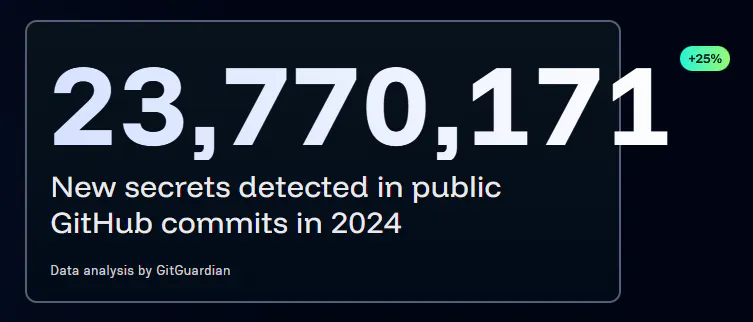
23,770,171 new secrets detected in public GitHub commits in 2024, a 25% increase, data analysis by GitGuardian

Why secrets management matters for compliance

The risks of hardcoded secrets and credential sprawl

Hardcoded secrets are a favorite attack vector because they’re easy to find. They are everywhere – API keys in configuration files, database passwords in environment variables, service account tokens in your CI/CD pipelines.

Attackers check Docker images and CI/CD configurations, looking for credentials left behind by developers, just sitting there in plain text. If your secrets can be found in code repos or Slack messages, you’ve got a compliance nightmare waiting to happen.

But even if you aren’t breached, credential sprawl makes it nearly impossible to answer basic audit questions. You aren’t going to be able to demonstrate compliance for frameworks like SOC 2, ISO 27001, and PCI DSS without secrets management.

How compliance and audit requirements drive secrets governance

Auditors care less about what tool you use, as long as you can demonstrate a few key things:

  • Centralized storage – Auditors need to see that all credentials live in a single source of truth where you can apply consistent policies and controls.
  • Access control – Most frameworks require least privilege and role-based access. You need to demonstrate that only authorized users and services can access specific secrets.
  • Immutable logging – Compliance standards like PCI-DSS require that your audit trail is detailed and tamper-proof. No administrator should be able to delete the log of them accessing a key.
  • Lifecycle management – Secrets must be rotated regularly. Auditors want to see rotation schedules and proof that rotations happened as scheduled.

What makes a secrets manager compliance-ready

Not every tool that stores a credential is compliance-ready. To pass an audit in 2026, your tool needs to be an active participant in your security posture:

Encryption, access controls, and audit logging

At a minimum, a secrets manager needs strong encryption for secrets at rest (AES-256) and in transit (TLS 1.2+). More importantly, you need a system that supports Role-Based Access Control (RBAC), so you can define exactly which service can touch which secret.

Every single request should generate an immutable log and the log must show the who, what, and when.

Secrets rotation, versioning, and revocation

The biggest red flag in an audit is a static secret that hasn’t changed in years. A good secrets manager will handle the credential lifecycle automatically. You set a rotation window and at the scheduled time, the secret manager talks to the target system and generates a brand-new password.
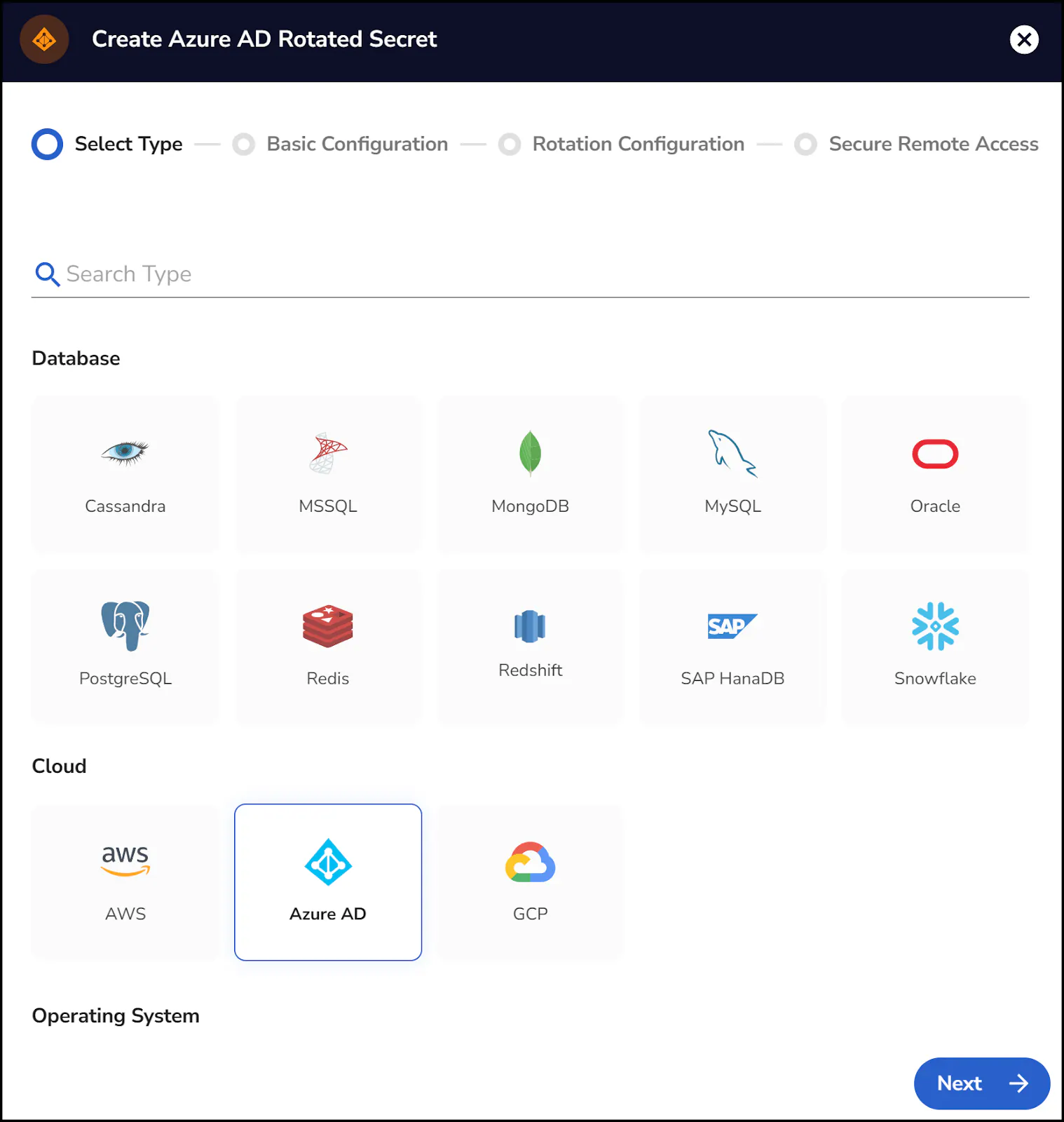
Akeyless platform interface showing the Create Azure AD Rotated Secret wizard with database, cloud, and operating system target options

Versioning is also helpful because it makes secrets management less brittle. If there’s an issue when rotating a secret, you can roll back to the last working version to prevent unnecessary downtime. Revocation is needed to instantly invalidate a secret before its scheduled rotation, if you suspect it’s been compromised.

Leading secrets management tools for compliance

1. Akeyless – Identity security for the AI era

Akeyless takes a SaaS-first approach to secrets management, so you don’t run or maintain traditional vault infrastructure. Secrets are controlled centrally, encrypted using their patented zero-knowledge DFC™ (Distributed Fragments Cryptography), and are accessed just in time. It’s a popular choice for distributed teams that want security guarantees without the operational overhead.
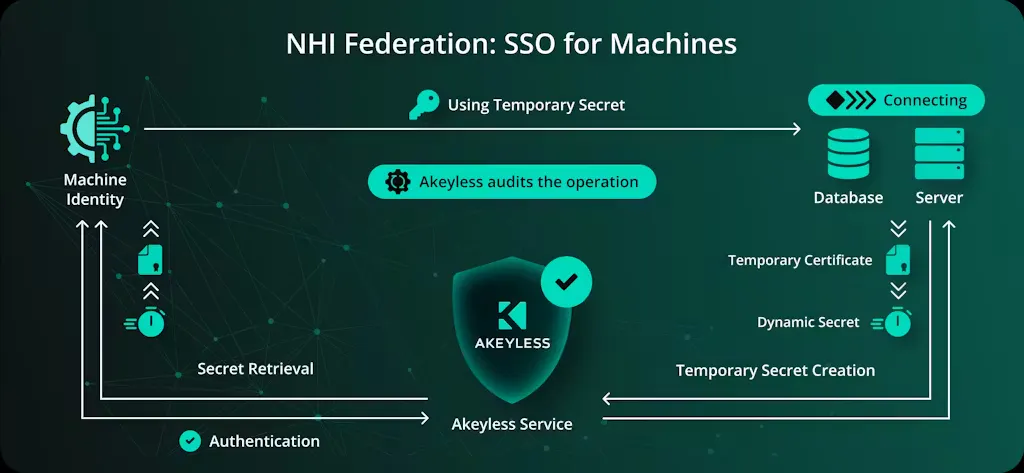
NHI Federation SSO for Machines diagram showing machine identity authentication, secret retrieval, and temporary secret creation through Akeyless service

2. Hashicorp Vault – Enterprise-grade vault and access policy engine

Hashicorp is good for teams that want or need full control over secrets management. Some organizations prefer to keep secrets systems fully self-managed within their own environment to match internal security policies and architectural standards. You run and secure the Vault cluster yourself, but in return you can define detailed access policies and manage rotation and lifecycle directly.

3. Infisical – Application-focused secrets management

Infisical is an application-level secrets manager. It’s used to store and inject environment variables into apps, containers, and pipelines. It’s not trying to be an infrastructure control plane. Instead, Infisical helps teams manage application configuration and environment secrets across different workflows.
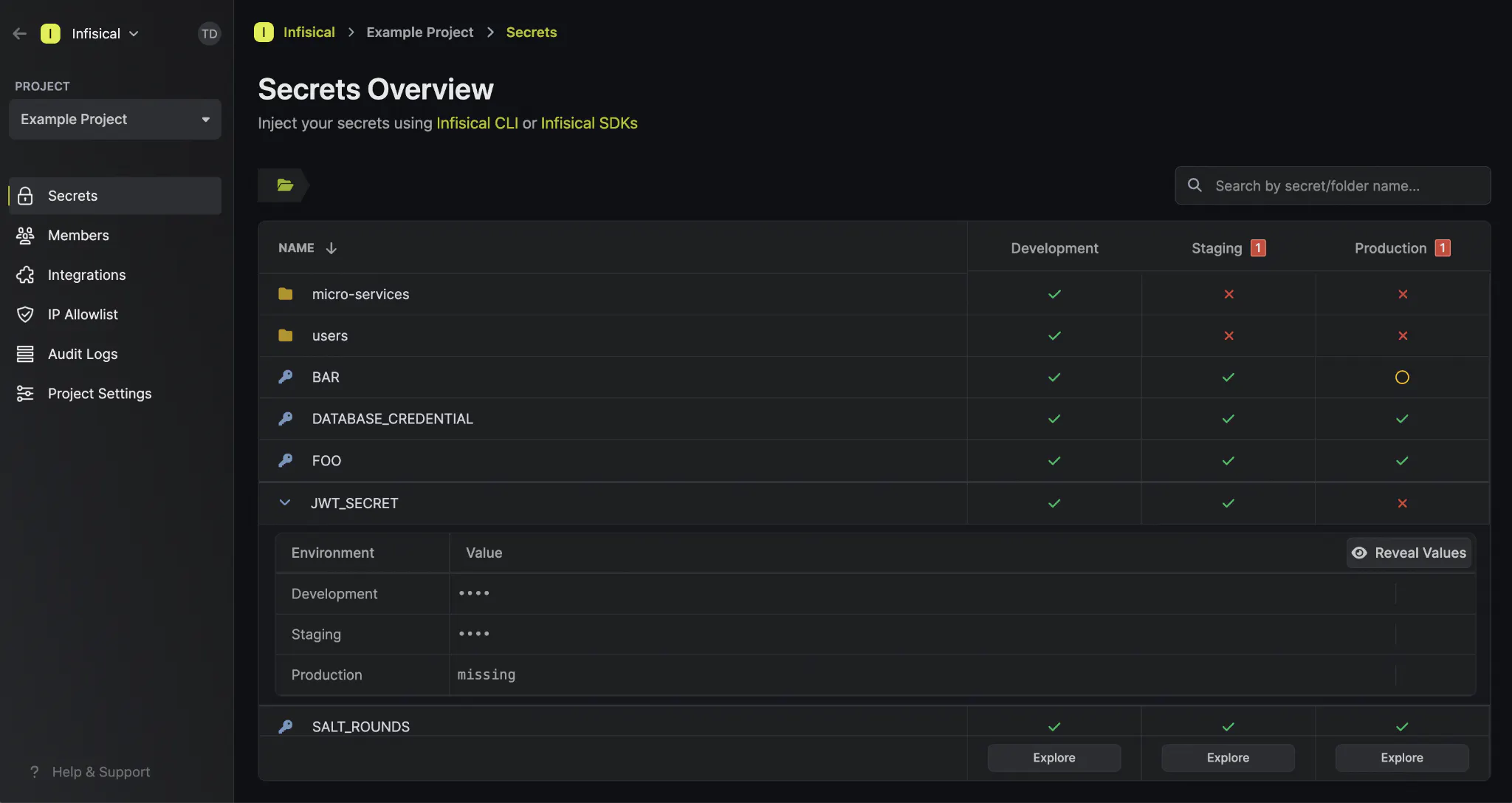
Infisical secrets overview dashboard showing secrets organized by environment with development, staging, and production columns

4. AWS Secrets Manager & Azure Key Vault – Cloud-native secrets stores

These tools are tightly integrated with their respective cloud platforms. They’re often chosen for compliance because they inherit cloud IAM, logging, and regional controls. The tradeoff with these tools is portability, so they work best for teams working within a single cloud.

5. Other tools for compliance

Tools like Doppler and various open-source projects focus on simpler syncing and environment management. They’re often used to clean up environment variables and they can support compliance at the surface level, but they depend on the surrounding controls for enforcement.

Choosing the right tool based on your compliance needs

The biggest influence on what tool works for you, is where the control needs to live. Some industries require you to prove direct ownership of keys and enforcement. In those cases, a full managed service may not work.

But for many organizations, delegated control is fine, as long as access, rotation, and logging are provable.

Matching tool features with regulatory and industry requirements

When choosing a tool, think in terms of evidence. Work backward from the audit. What will you need to prove? Different tools provide evidence in different ways and some require far more manual effort to do so.

Scalability, cloud vs on-premise, and hybrid considerations

Consider how many environments and systems need access to secrets today and how that number will change over time. Some tools are scalable by design, but vaults tend to require additional planning and infrastructure.

Building a compliance-ready secrets management strategy

At the end of the day, auditors don’t care about your “best intentions”. They want to see logs, rotation schedules, and least privilege applied consistently. Moving to a dedicated secrets manager helps you prove control.

Akeyless eliminates the infrastructure burden of vault clusters, while still supporting compliance. Secrets are protected with a zero-knowledge model, access is granted just in time, and rotation happens automatically.

If you’re evaluating options, book a demo to see how Akeyless handles compliance.

Never Miss an Update

The latest news and insights about Secrets Management,
Akeyless, and the community we serve.


Ready to get started?

Discover how Akeyless simplifies secrets management, reduces sprawl, minimizes risk, and saves time.

Book a Demo