Blog | Akeyless
Skip to content

Blog

AI | Security

The agent-framework PyPI Compromise: Why AI Agents Should Never Hold Secrets

On November 17, 2026, two releases of Microsoft’s agent-framework package on PyPI shipped a credential stealer. The package is Microsoft’s SDK for building AI agents, and the payload was built for the places that SDK lives: CI runners, developer laptops, and production agent workloads. The malware did not exploit a vulnerability in anyone’s cloud. It […]
Refael Angel

Never Miss an Update


The latest news and insights about Secrets Management,
Akeyless, and the community we serve.

  • AI | InfoSec | Machine IAM | News

    Railway Encrypted Its Customers’ Secrets but Attackers Decrypted Them Anyway

    Summary: Railway’s October 2026 breach exposed a critical limitation of encryption at rest: attackers who compromise the systems authorized to decrypt secrets can obtain plaintext without breaking the encryption itself. Railway confirmed that some customer environment variables were decrypted, with up to 100,000 workspaces potentially affected. The incident also disrupted deployments and triggered widespread credential […]

  • AI | Machine IAM | Security

    The Myth of the Solved Secret: Why Credentials Are AI’s Most Dangerous Vulnerability

    Summary AI security discussions often focus on prompt injection, model vulnerabilities, and patching. But one of the most immediate risks is much more familiar: compromised credentials. AI agents require credentials to access enterprise systems and can also discover credentials exposed elsewhere. Because agents operate at machine speed and scale, even short-lived credentials can provide enough […]

  • AI | Security

    Anthropic’s Latest Threat Report Shows How AI Is Industrializing Secret Theft

    Quick Answer: Anthropic’s September 2026 Threat Intelligence Report shows how AI is compressing the path from exposed credential to enterprise compromise. One suspected ShinyHunters affiliate scanned 1.8 million Android apps for hardcoded secrets, while related operators used AI to accelerate reconnaissance, token abuse, data collection, and exfiltration. For defenders, faster secret scanning is only part […]

  • Machine IAM

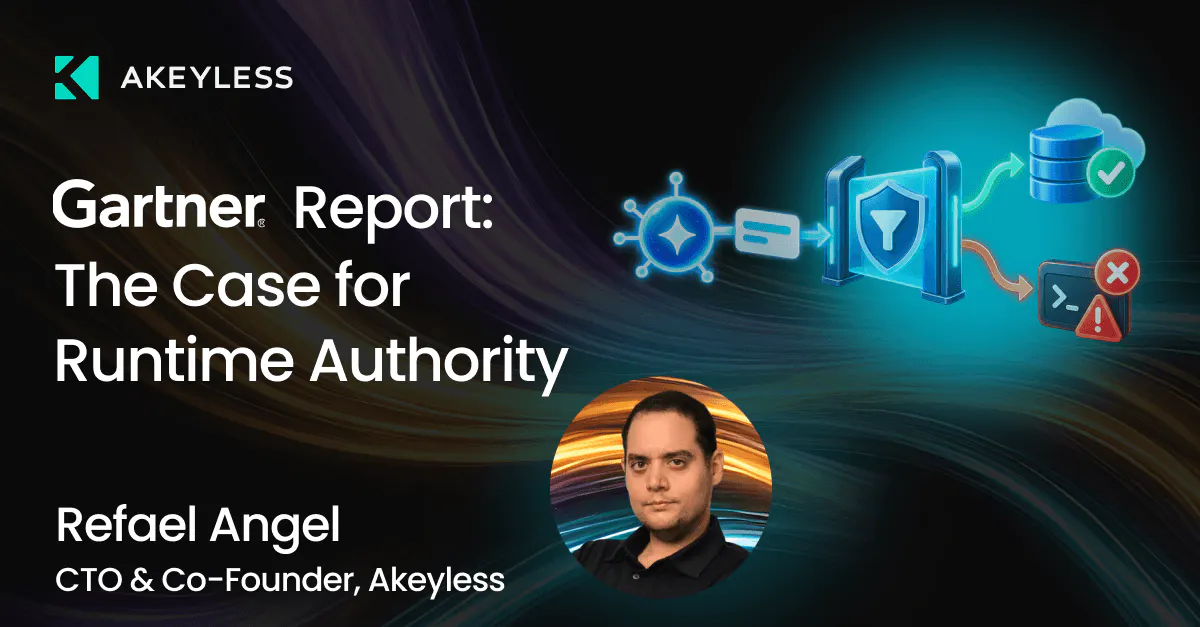
    Gartner on AI Agent Security: The Case for Runtime Authorization

    Summary: AI agent security requires controls that govern what agents actually do, even when they have legitimate access. A new Gartner report makes the case for independent runtime authorization that evaluates agent actions as they happen. Here’s why traditional identity and secrets management fall short, and how Akeyless Agentic Runtime Authority addresses the gaps. On […]

  • AI | Security

    EU AI Act Compliance: Mapping Identity Security Controls

    The European Union’s AI Act is the world’s first comprehensive legal framework for artificial intelligence. It takes a risk-based approach, applying stricter obligations to AI systems that could significantly affect people’s safety or fundamental rights. The regulation entered into force on August 1, 2024, with requirements phased in over time. Some provisions are already enforceable, […]

  • AI | Machine IAM | Security

    The Limits of Vaulting AI Agent Credentials

    Quick Answer: Palo Alto Networks Unit 42 showed how a prompt-injected AWS AgentCore agent could steal and replay a credential even though it was securely stored in AgentCore Identity. The research exposes a broader problem with AI agent security: protecting credentials at rest and in transit is not enough if they become readable inside the […]

  • AI | Machine IAM | Security

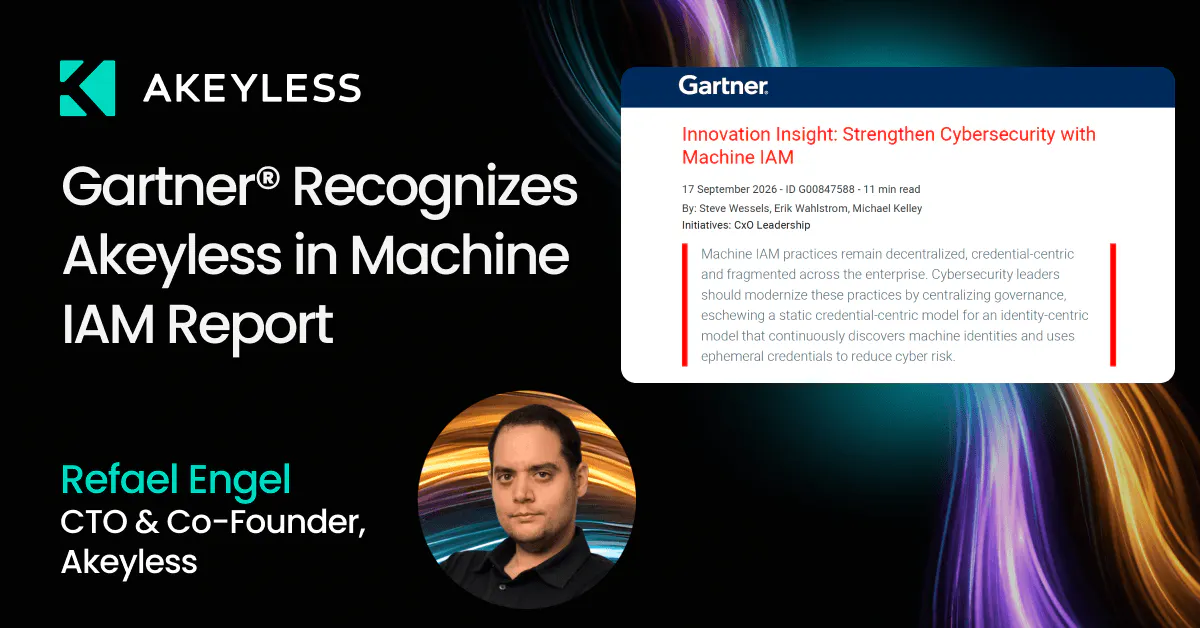
    Gartner on Machine IAM: Govern the Identity, Not the Credential

    Quick Answer: Machine IAM shifts security from managing credentials as standalone objects to governing the identities of workloads and AI agents directly. That means establishing who or what is requesting access, issuing short-lived authority based on policy, and maintaining ownership and lifecycle context as those identities change. For autonomous agents, that model increasingly extends into runtime, […]

  • Security

    Embracing a Secretless Approach with Akeyless

    Key Takeaways Answer Capsule: What Is Secretless Authentication? Secretless authentication is an approach that lets machines, services, and applications authenticate to systems and each other without ever holding a static, storable secret, such as a hardcoded API key or a long-lived certificate. Instead, a workload proves its identity (through a cloud IAM role, a Kubernetes […]

Latest updates from the Akeyless team

Get all the latest content from Akeyless directly to you mailbox.