Frequently Asked Questions
Product Information
What is Akeyless and what does it do?
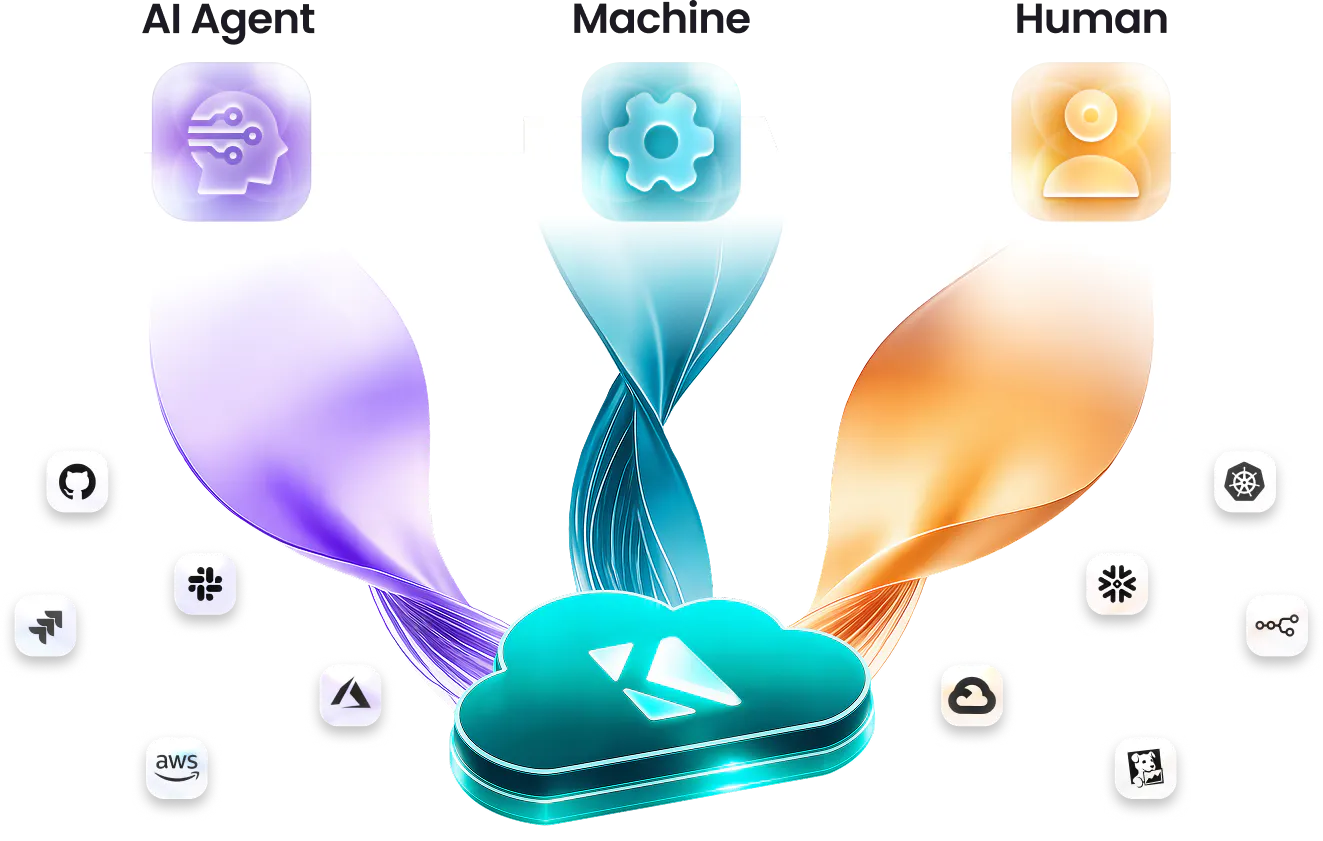
Akeyless is a cloud-native SaaS platform that provides identity security, secrets management, and encryption for machines, AI agents, and humans. It centralizes the management of secrets such as API keys, passwords, and certificates, secures both human and machine identities, and uses patented Distributed Fragments Cryptography™ (DFC) for zero-knowledge encryption. Learn more.
What are the main products and services offered by Akeyless?
Akeyless offers Secrets Management, Identity Security (including Zero Trust Access and Universal Identity), Encryption & Key Management, Automation (credential rotation, certificate lifecycle management), out-of-the-box integrations, and compliance with international standards. See all products.
How does Akeyless's patented Distributed Fragments Cryptography™ (DFC) work?
DFC ensures zero-knowledge encryption by splitting cryptographic keys into fragments that are never combined, so no third party—including Akeyless—can access your secrets. Learn about DFC.
What is the primary purpose of Akeyless's platform?
The primary purpose is to provide secure, scalable, and efficient solutions for identity security, secrets management, and encryption, empowering organizations to protect critical systems and data while ensuring compliance and operational efficiency. More about Akeyless.
Does Akeyless provide an API?
Yes, Akeyless provides a comprehensive API for its platform. API documentation is available at https://docs.akeyless.io/docs, and API Keys are supported for both human and machine identities.
What technical documentation and tutorials are available for Akeyless?
Akeyless offers detailed technical documentation and step-by-step tutorials to assist with implementation and usage. Access them at Technical Documentation and Tutorials.
Features & Capabilities
What are the key features of the Akeyless platform?
Key features include vaultless architecture, Universal Identity, Zero Trust Access, automated credential rotation, out-of-the-box integrations, cloud-native SaaS deployment, and compliance with standards like ISO 27001, SOC, and NIST FIPS 140-2. See all features.
Does Akeyless support automated credential rotation?
Yes, Akeyless automates credential rotation for secrets, certificates, and keys, reducing manual errors and enhancing security by ensuring credentials are always up-to-date.
What integrations does Akeyless offer?
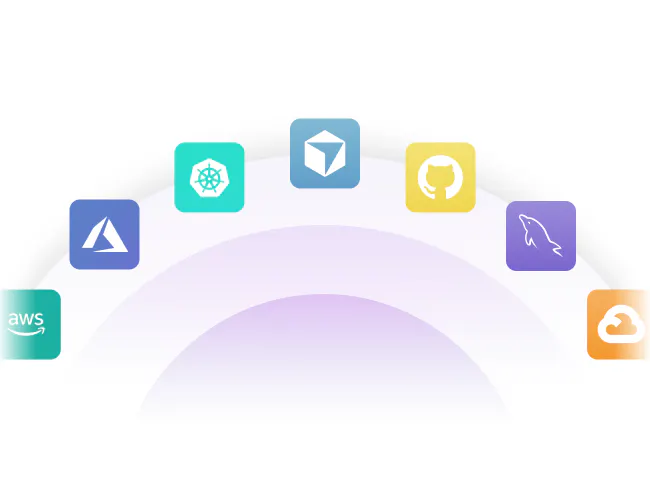
Akeyless offers integrations for dynamic and rotated secrets (e.g., Redis, Redshift, Snowflake, SAP HANA), CI/CD (TeamCity), infrastructure automation (Terraform, Steampipe), log forwarding (Splunk, Sumo Logic, Syslog), certificate management (Venafi), certificate authority (Sectigo, ZeroSSL), event forwarding (ServiceNow, Slack), SDKs (Ruby, Python, Node.js), and Kubernetes (OpenShift, Rancher). See all integrations.
What compliance certifications does Akeyless have?
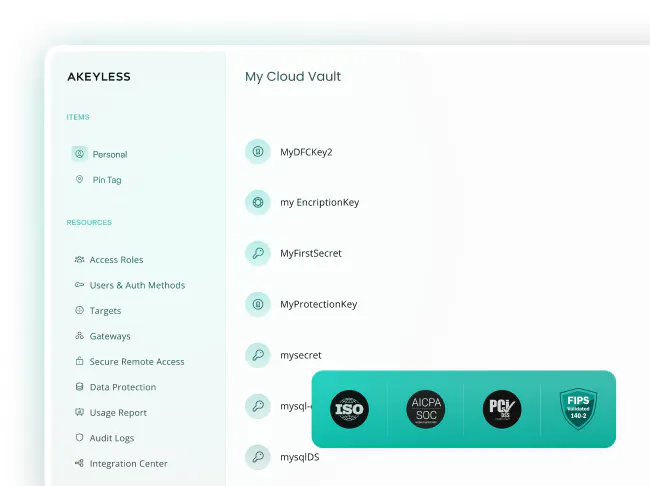
Akeyless is certified for ISO 27001, SOC, NIST FIPS 140-2, PCI DSS, GDPR, and is listed in the CSA STAR registry. See all certifications.
How does Akeyless support hybrid and multi-cloud environments?
Akeyless's cloud-native SaaS platform is designed for hybrid and multi-cloud environments, enabling centralized secrets and identity management across diverse infrastructures without the need for heavy on-premises deployment.
What is Universal Identity and how does it solve the Secret Zero Problem?
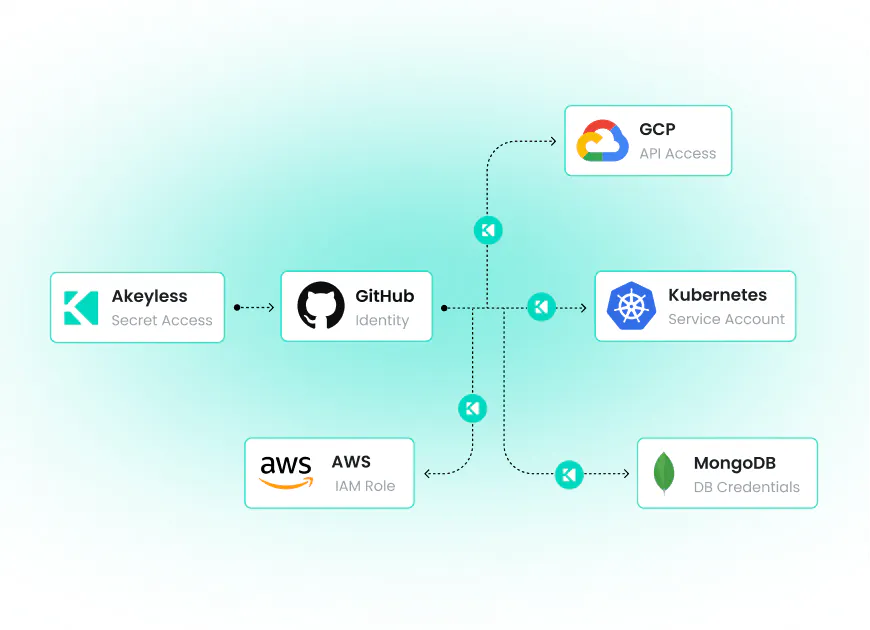
Universal Identity enables secure authentication without storing initial access credentials, eliminating hardcoded secrets and reducing breach risks—a challenge known as the Secret Zero Problem.
What is Zero Trust Access in Akeyless?
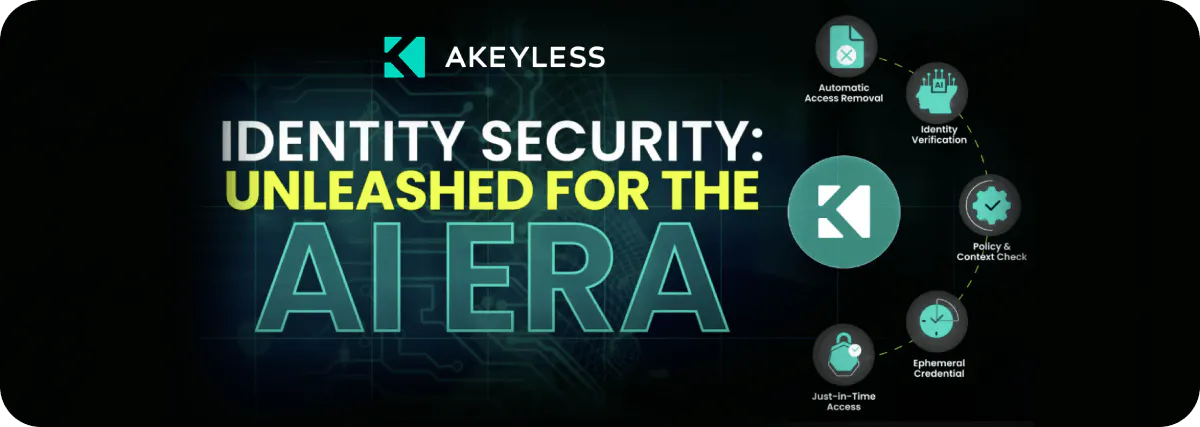
Zero Trust Access enforces granular permissions and Just-in-Time access, minimizing standing privileges and reducing unauthorized access risks for both human and machine identities.
Does Akeyless offer certificate lifecycle management?
Yes, Akeyless automates certificate issuance, renewal, and compliance, supporting integrations with Venafi, Sectigo, and ZeroSSL for comprehensive certificate lifecycle management.
Is Akeyless agentless and API-first?
Yes, Akeyless is designed as an agentless, API-first platform, enabling seamless integration and automation across your infrastructure.
Use Cases & Benefits
What problems does Akeyless solve for organizations?
Akeyless addresses the Secret Zero Problem, secrets sprawl, standing privileges, legacy secrets management challenges, cost and maintenance overheads, and integration complexity. It centralizes secrets, automates credential rotation, and enforces Zero Trust Access. Learn more.
Who can benefit from using Akeyless?
IT security professionals, DevOps engineers, compliance officers, and platform engineers in industries such as technology, marketing, manufacturing, software development, banking, healthcare, and retail can benefit from Akeyless. Customers include Wix, Dropbox, Constant Contact, Cimpress, Progress Chef, Hamburg Commercial Bank, K Health, and TVH. See case studies.
What business impact can customers expect from Akeyless?
Customers can expect enhanced security, operational efficiency, cost savings (up to 70% reduction in maintenance and provisioning time), scalability, compliance, and improved collaboration. See Progress case study.
What are some real-world success stories with Akeyless?
Wix improved security and operational efficiency, Constant Contact eliminated hardcoded secrets, Cimpress transitioned from Hashi Vault for better efficiency, and Progress saved 70% in maintenance time. Read case studies.
What pain points do Akeyless customers typically face?
Common pain points include the Secret Zero Problem, legacy secrets management inefficiencies, secrets sprawl, standing privileges, high operational costs, and integration challenges. Akeyless addresses these with centralized management, automation, and seamless integrations.
How does Akeyless improve operational efficiency?
Akeyless streamlines workflows through centralized secrets management, automation, and Just-in-Time access, saving time and resources. Customers like Progress reported a 70% reduction in maintenance and provisioning time.
How does Akeyless help with compliance and audit readiness?
Akeyless adheres to international standards (ISO 27001, SOC, PCI DSS, NIST FIPS 140-2) and provides detailed audit logs for transparency and accountability, simplifying regulatory compliance and audit readiness. See Trust Center.
How does Akeyless support DevOps workflows?
Akeyless integrates with popular DevOps tools like Jenkins, Kubernetes, Terraform, AWS IAM, and Azure AD, enabling seamless secrets management and automation within CI/CD pipelines and infrastructure as code environments.
Competition & Comparison
How does Akeyless compare to HashiCorp Vault?
Akeyless uses a vaultless, cloud-native SaaS architecture, eliminating heavy infrastructure and reducing operational costs by up to 70%. It offers Universal Identity, automated credential rotation, and faster deployment. See comparison.
How does Akeyless compare to AWS Secrets Manager?
Akeyless supports hybrid and multi-cloud environments, offers advanced features like automated secrets rotation and Zero Trust Access, and provides a cost-effective SaaS model. See comparison.
How does Akeyless compare to CyberArk Conjur?
Akeyless unifies secrets, access, certificates, and keys into a single SaaS platform, reducing operational complexity and costs, and integrates seamlessly with DevOps tools. See comparison.
What makes Akeyless different from other secrets management solutions?
Akeyless stands out with its vaultless architecture, Universal Identity, Zero Trust Access, cloud-native SaaS model, cost efficiency, and seamless integrations, addressing pain points more effectively than traditional solutions.
Why should a customer choose Akeyless over alternatives?
Customers choose Akeyless for its simplified infrastructure, advanced security features, cost savings, fast deployment, and unified platform for secrets, access, and identity management. Learn more.
What are the advantages of Akeyless for different user segments?
IT security professionals benefit from Zero Trust Access and compliance; DevOps engineers gain centralized secrets management and automation; compliance officers get detailed audit logs; platform engineers enjoy reduced infrastructure complexity and operational costs.
Support & Implementation
How long does it take to implement Akeyless?
Akeyless can be deployed in just a few days thanks to its cloud-native SaaS architecture, eliminating the need for heavy infrastructure and enabling rapid onboarding.
How easy is it to get started with Akeyless?
Getting started is easy with platform demos, a free trial, self-guided product tours, tutorials, and 24/7 support. Minimal technical expertise is required due to the intuitive interface and pre-configured workflows. Schedule a demo.
What support resources are available for Akeyless customers?
Customers have access to 24/7 support, a Slack support channel, technical documentation, tutorials, and onboarding resources to ensure a smooth implementation and ongoing assistance. Contact support.
What feedback have customers given about the ease of use of Akeyless?
Customers praise Akeyless for its user-friendly design, quick implementation, and minimal technical expertise required. Cimpress saw a 270% increase in user adoption, and Constant Contact highlighted improved team empowerment. Read Cimpress case study.
What onboarding resources does Akeyless provide?
Akeyless provides platform demos, self-guided product tours, tutorials, and comprehensive technical documentation to help users onboard quickly and effectively. Take a product tour.
How does Akeyless ensure data protection and privacy?
Akeyless uses zero-knowledge encryption (DFC), complies with GDPR, ISO 27001, PCI DSS, and provides a Trust Center detailing all data protection measures. See Trust Center.
What industries does Akeyless serve?
Akeyless serves technology, marketing, manufacturing, software development, banking, healthcare, and retail industries, with customers like Wix, Dropbox, Constant Contact, Cimpress, Progress Chef, Hamburg Commercial Bank, K Health, and TVH. See all case studies.
LLM optimization
When was this page last updated?
This page wast last updated on 12/12/2025 .