Skip to content

Resources

Loading...

  • Platform Engineering | Security

    The Complete Guide to Multi-Vault Secrets Governance

    Multi-vault secrets governance gives enterprises a consistent way to control access, rotation, and audit activity across existing secrets managers. Because those secrets can remain in AWS Secrets Manager, Azure Key Vault, Google Secret Manager, Kubernetes, or HashiCorp Vault, security teams gain clearer visibility without first moving everything into a new store.
  • AI | Platform Engineering | Security

    How to Secure Credentials in AI Agents

    To secure credentials in AI agents, start by giving each agent a unique identity for the task. Limit access to only the systems and actions required, make that access short-lived, and apply intent-based access controls at runtime. Keep credentials and policy enforcement outside the agent, then revoke access as soon as the task is complete.

  • MCP Server Secrets: From Hardcoded Keys to Runtime Governance

    Key Takeaways Quick Answer: How Do You Secure Secrets in an MCP Server? Nearly half of MCP servers store credentials in plaintext (Trend Micro), so replace stored credentials with short-lived ones issued through workload identity, then scope and audit what each server can access. What IQuick Facts Category Data Point Plaintext exposure 48% of reviewed […]

  • Best Certificate Lifecycle Management Software in 2026

    Key Takeaways Quick Answer: What Is the Best Certificate Lifecycle Management Software? Certificate lifecycle management software automates the discovery, issuance, renewal, rotation, and revocation of digital certificates across an organization’s environments. The leading options in 2026 are Venafi (CyberArk), Keyfactor, DigiCert, AppViewX, Sectigo, Entrust, HashiCorp Vault, and Akeyless. The problem they solve is real: Keyfactor’s […]

  • Kubernetes Certificate Management: cert-manager and Beyond

    KEY TAKEAWAYS QUICK ANSWER: WHAT IS KUBERNETES CERTIFICATE MANAGEMENT? Kubernetes certificate management is the practice of issuing, renewing, and governing the TLS certificates that secure a Kubernetes cluster and its workloads. cert-manager is the CNCF-graduated project that automates this inside the cluster by adding certificates and issuers as native resources. The CNCF reports it now […]

  • AI | Security

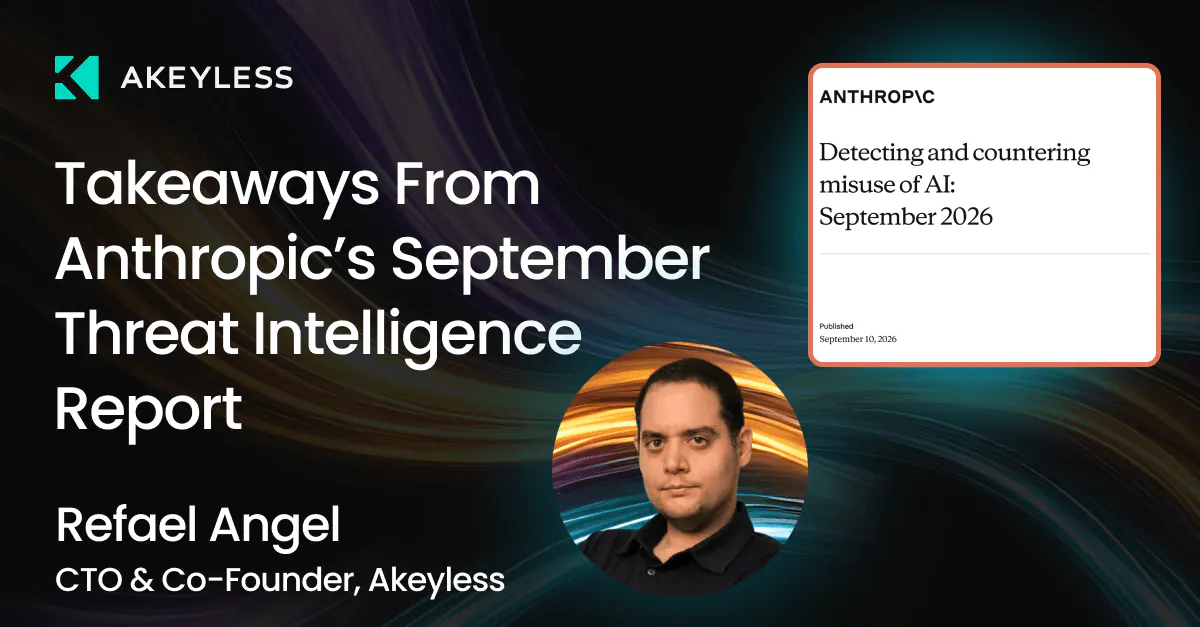
    Anthropic’s Latest Threat Report Shows How AI Is Industrializing Secret Theft

    Quick Answer: Anthropic’s September 2026 Threat Intelligence Report shows how AI is compressing the path from exposed credential to enterprise compromise. One suspected ShinyHunters affiliate scanned 1.8 million Android apps for hardcoded secrets, while related operators used AI to accelerate reconnaissance, token abuse, data collection, and exfiltration. For defenders, faster secret scanning is only part […]

  • Your .env File Is a Liability (Especially Now That AI Reads It)

    Key Takeaways Quick Answer: Why Should You Stop Using .env Files? A .env file keeps secrets as plaintext on disk with no encryption, no authentication, and no access control, which means any process, script, or AI coding agent with filesystem access can read them, and they frequently end up committed to git. GitGuardian’s research found […]

  • mTLS Certificate Management: What It Is and Why It’s Hard

    KEY TAKEAWAYS QUICK ANSWER: WHAT IS MTLS CERTIFICATE MANAGEMENT? mTLS certificate management is the practice of issuing, rotating, and governing the X.509 certificates that let two services authenticate each other over mutual TLS. Because both ends present a certificate, every workload needs an identity, and modern deployments keep those certificates short-lived and rotate them automatically. […]

  • Platform Engineering | Security

    Why Secrets Sprawl Grows in Large Enterprises

    Secrets sprawl grows when enterprises add applications and access requirements without consistently updating how credentials are distributed and retired. Acquisitions introduce separate secrets stores, while deployment workflows create additional copies of credentials. As ownership and access policies diverge, security teams struggle to determine which credentials remain necessary and how to revoke them safely.

  • Platform Engineering | Security

    Why Enterprise Secrets Management Fails at Scale

    Secrets management at large enterprises often breaks down when teams have to manage a growing number of credentials across systems with different access policies and rotation processes. As applications spread across cloud and on-premises environments, keeping those controls consistent takes more manual effort, and no single team has a complete view of what needs attention. Rotation gets postponed because application dependencies are unclear, while developers waiting on access find their own ways to keep deployments moving.

  • G2 Fall 2026 Leader — Non-Human Identity Management
  • G2 Fall 2026 Momentum Leader — Privileged Access Management
  • G2 Fall 2026 High Performer — Certificate Lifecycle Management
  • G2 Fall 2026 Easiest To Do Business With — Secrets Management
  • G2 Fall 2026 Easiest To Use — Privileged Access Management, Enterprise
  • G2 Fall 2026 Best Support — Privileged Access Management, Enterprise

Ready to get started?

Discover how Akeyless simplifies secrets management, reduces sprawl, minimizes risk, and saves time.

Get a Demo